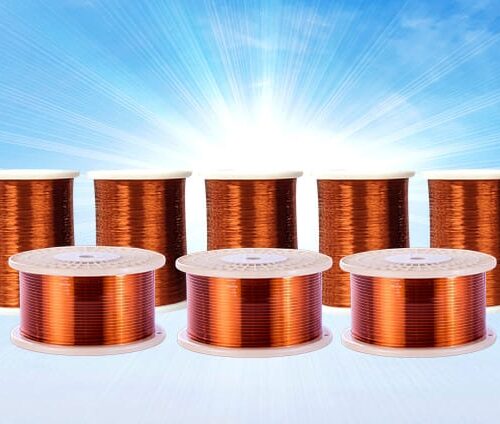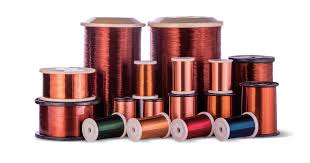
Fine Enameled Wire
| 1. Thinning: The wire diameter is extremely fine. This makes it lightweight and space-saving, making it easy to route wires in miniaturized devices. 2. High conductivity: Conductors are typically made of high-purity metals such as copper and silver, or processes such as tinning and silver plating are used to enhance conductivity, reducing resistive losses during signal transmission. 3. Low signal latency: Due to the small wire diameter, the signal transmission path is short, resulting in low resistance and short signal latency, enabling efficient and fast signal transmission, meeting the requirements of high-frequency signal transmission. 4. Excellent flexibility: Micro-wires are generally made of multiple strands of fine metal wire, exhibiting excellent flexibility and bendability. Their bend radius can be as small as three times the wire diameter, and they are not prone to breakage even after repeated bending. They are suitable for use in complex spatial environments, such as robot joints and drone interiors, where dynamic routing is required. 5. High-temperature and corrosion resistance: Some micro-wires utilize specialized insulating materials which offer high-temperature and chemical resistance. They are also chemically and oil-resistant, making them suitable for harsh operating environments. 6. High interference resistance: Some micro-wires are equipped with shielding layers or feature optimized wire structures to reduce electromagnetic interference, ensuring stable and accurate signal transmission. They are suitable for electronic devices sensitive to electromagnetic interference. |